
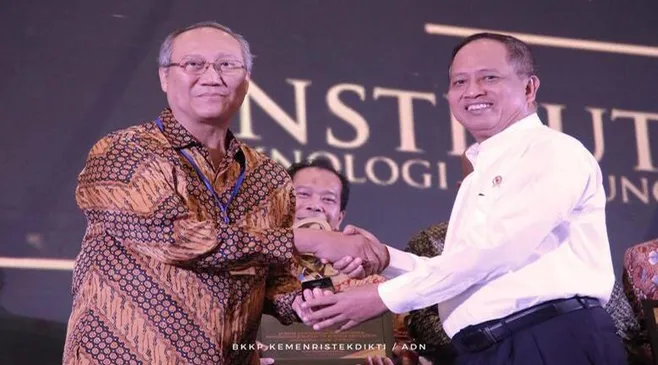
Prof. Drs. Ec. Ir. Riyanarto Sarno, M.Sc., Ph.D., Professor at the Department of Informatics, Institut Teknologi Sepuluh Nopember (ITS), has developed an innovative medical device powered by Artificial Intelligence (AI) to support brain surgery operations — a stereotactic system.
The innovation consists of two major components: a hardware unit called BrainRY and a software application named BrainNAV. The system was co-designed with Dr. dr. Achmad Fahmi, Sp.BS(K) Subsp.NF, FINPS, a neurosurgery specialist at Dr. Soetomo Regional Public Hospital.
Bridging Engineering and Medical Practice
The stereotactic system aims to deliver a higher-quality alternative to existing devices in the market, designed through close collaboration between engineering researchers and medical practitioners.
“Dr. Fahmi provided input on the design, instrumentation requirements, and development priorities based on his experience as an end-user of stereotactic devices.”
Prof. Riyanarto Sarno
Domestic Innovation, Global Showcase
BrainRY and BrainNAV were proudly showcased at Hannover Messe 2023 in Germany — one of the world’s largest industrial technology exhibitions — representing Indonesia’s growing capability in medical device innovation.
The system is currently undergoing in vitro testing. With a high Domestic Component Level (TKDN), this Indonesia-made solution is expected to be significantly more affordable than imported stereotactic devices, making advanced brain surgery technology accessible to more hospitals across the country.
Supporting the Future of Neurosurgery in Indonesia
Funded by the Indonesia Endowment Fund for Education (LPDP), this research is expected to encourage other researchers and academics to advance Indonesia’s medical equipment industry and address the growing demand for neurosurgical tools nationwide.
The BrainNAV software leverages AI to assist neurosurgeons in visualizing a patient’s head before surgery, enabling more precise pre-operative planning and improving surgical outcomes.
Sources: ITS News · ANTARA News · Narasi.tv